





 1

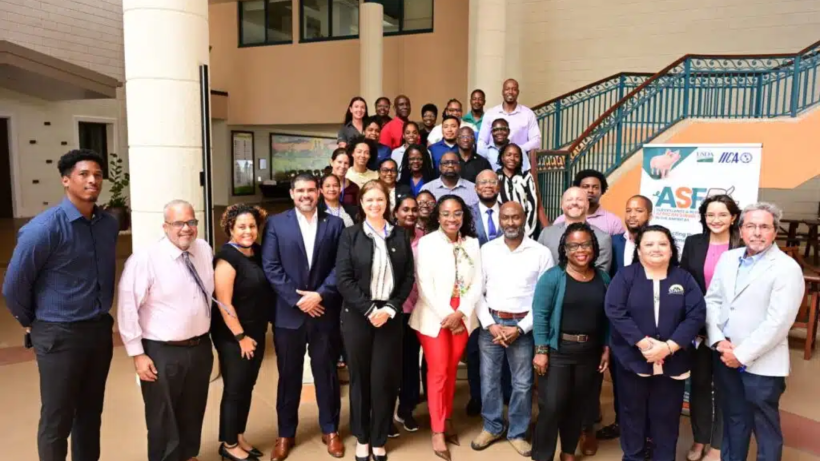
Representatives from 17 Caribbean countries met in Barbados to strengthen their preparedness and response capabilities regarding African swine fever (ASF) by reviewing and updating national rapid response plans designed to protect swine producers, strengthen veterinary services, and safeguard food security in the region. The event is part of the Surveillance and Response Project to Prevent African Swine Fever in the Americas, developed by the U.S. Department of Agriculture (USDA) and technically coordinated by the Inter-American Institute for Cooperation on Agriculture (IICA), which has been supporting national veterinary services in the Caribbean region since 2024.
Barbados’ Minister of Agriculture, Food, and Nutritional Security, Shantal Munro-Knight, emphasized that animal health is closely linked to food security, trade, and rural livelihoods, and noted that regional preparedness and cooperation are essential for reducing risks and protecting producers. Ericka Calderón, a technical specialist and project manager at IICA, noted that the work carried out has helped strengthen prevention and response capacities through surveillance programs, training for technical staff, simulations, and cooperation among veterinary services.

Allister Glean, IICA’s representative in Barbados, emphasized that advanced preparation is the best tool for protecting the regional swine industry against cross-border health threats, and that the resilience of the Caribbean’s agrifood systems depends on the ability of countries to anticipate risks and coordinate efforts among governments, producers, veterinary services, and international organizations.
During the workshop, representatives from veterinary services (the first line of defense against transboundary diseases) shared experiences on epidemiological surveillance, diagnosis, traceability, risk communication, and operational response mechanisms. Zackery Tipton, senior manager of the African Swine Fever Prevention Program at the USDA Foreign Agricultural Service, stated that the first hours and weeks following a suspected case of ASF are critical, so each country must have clear, up-to-date response plans that are ready to be activated immediately. Mark Trotman, Director of Veterinary Services for Barbados, highlighted the importance of having tools in place to respond quickly and in a coordinated manner to a potential introduction of the disease.
The project directly benefits the Caribbean pork sector by promoting preventive measures that reduce the risk of economic and social losses for small and medium-sized producers, family farms, and supply chains linked to pork production.
September 10, 2026/ Inter-American Institute for Agricultural Cooperation (IICA)/ Barbados.
https://iica.int/es/